
The Provost’s Award for Excellence in Undergraduate Student Success annually recognizes staff, faculty, and administrators at the University of Pittsburgh who have positively impacted the student experience by engaging in collaborative and holistic academic advising and student success practices.
Awards are chosen in four different categories: professional staff academic advising, faculty advising and mentoring, advising administration, and student success impact.
Each award consists of a:
- $1,000 cash prize
- $1,500 grant funds to support professional development activities
Nominations for the 2027 awards will open on December 4, 2026. All awardees will be honored publicly at a reception event on May 6, 2027, during Global Advising Week.
With the help of the Student Success Team, nominees will also be given the option to forward their nomination for the upcoming NACADA Outstanding Awards in their coordinating category.

Award Eligibility, Categories, Nomination and Selection Process, and Nomination Requirements
- Award Eligibility and Criteria
To be eligible for an award, the nominee must be a current staff member, faculty member, or administrator and have served full-time at the University of Pittsburgh for at least two years at the time of the nomination.
Individuals may nominate themselves.
Advisors, mentors, and staff who are nominated for an award will be contacted and invited to submit a nominee packet with materials that more fully describe their student success and advising accomplishments.
Nominee packets missing required information, do not follow required guidelines, or exceed the total page limit (10 pages) will be deemed ineligible.
- Award Categories and Nomination Process
The University of Pittsburgh students, administration, staff, and faculty are invited to nominate eligible candidates for the following awards:
- Professional Staff Academic Advisor Award – primary role, professional staff who formally serves as a student’s designated undergraduate academic advisor (e.g., Advisor I, Advisor II, Advisor III)
- Faculty Advisor and Mentor Award – full-time faculty who provide advising and/or mentoring for undergraduate students in their discipline, major, college, or school (e.g., for opportunities such as internships, graduate school preparation, career, research)
- Advising Administrator Award – staff, faculty, or executive personnel whose primary role is to administer advising, but may also have an advising roster of students (e.g., Assistant Director, Associate Director, Director, Associate Dean)
- Student Success Impact Award – full-time staff that supports a student’s academic success whose primary role is outside of the other award categories (e.g., academic coach, program advisor, and/or resource advisor)
Letters of nomination should address the nominee’s evidence of excellence in student success and advising by means of specific examples in relation to the philosophy above or the nomination category.
Each nomination letter should:
- Include the nominee’s name, department and contact information
- Include the nominator’s signature and clearly indicate their relationship to the nominee
- Specify the award category
- Focus on qualities and experiences that make the nominee outstanding in their role, highlighting what they've done to go above and beyond their duties.
- Provide comprehensive materials that will allow the committee, regardless of their familiarity with the nominee’s role, background, or program, to fully understand and appreciate the nominee's work and accomplishments.
- Not to exceed two pages, single-spaced.
- Selection Process
Advisors, mentors, and staff who are nominated for an award will be contacted and invited to submit a nominee packet with materials that more fully describe their student success and advising accomplishments.
The Provost’s Awards Committee is appointed from past winners and by the University Undergraduate Advising Committee (UUAC). The committee will review the nominee packets using a rubric for each of the categories and select finalists in each category to be recommended to the provost as potential recipients of the Provost’s Awards for Excellence in Undergraduate Student Success for 2026.
Professional Staff Academic Advisor Award Rubric »
Faculty Advisor and Mentor Award Rubric »
Advising Administrator Award Rubric »
Student Success Impact Award Rubric »
If you have any questions or have trouble accessing the rubric documents, please email April Belback, Associate Vice Provost for Student Success and Advising at abelback@pitt.edu.
- Required Nominee Packet Materials
All materials must be uploaded into one single PDF document.
Total page count SHOULD NOT exceed 12 pages.
The order of the documents within the nominee packet should be in the order as follows: resume/CV, Advising Philosophy, Supervisory Letter of Support, Additional Letters of Support, Additional supporting materials.
Nominee packets may vary in how materials are distributed depending on the nominee’s role and contributions. For example, faculty nominees may include a more detailed CV, while professional staff advisors might rely more heavily on letters of support that reflect student impact. Similarly, advising administrators or student success professionals may include additional materials that demonstrate programmatic impact or outcomes.
Nominees are encouraged to prioritize the materials that best represent their work and impact, rather than maximizing the page limits. The selection committee evaluates each nomination using the award rubric, and nominees may find it helpful to review the rubric while preparing materials to ensure their submission clearly aligns with the criteria for their award category.
Professional Staff Academic Advisor Award Rubric »
Faculty Advisor and Mentor Award Rubric »
Advising Administrator Award Rubric »
Student Success Impact Award Rubric »
If you have any questions about the nominee packet or have trouble accessing the rubric documents, please email Jen Cooper or Mel Newcity at pittact@pitt.edu. A workshop will be offered to support nominees in the submission of their packets. Dates will be announced soon.
Current Resume or Curriculum Vitae
Please include a resume/vita that highlights student success or advising experiences and recent professional development.
Work experience should include position titles, a brief position description, or a list of job responsibilities, university name and department, employment dates.
Resume/CVs SHOULD NOT exceed more than four pages.
Advising/Teaching Philosophy
Please include a personal philosophy statement regarding the nominee approach to advising, mentoring, teaching, and/or advising administration.
Statements SHOULD NOT exceed one page, single-spaced.
Supervisory Letter of Support
Please include one letter of support from a current or previous supervisor, department head, associate dean, or dean that the nominee has worked under within the last six months.
These materials must be included in the one PDF file.
This letter must be signed and clearly indicates the author’s current or past relationship with the nominee.
If the nomination originated from their supervisor, nominees may include that nomination letter to fulfill the supervisory letter of support requirement.
This letter SHOULD NOT exceed two pages, single space.
Additional Letter(s) of Support
Please include at least one additional letter of support which may come from colleagues, team members, departmental leadership, faculty, current students or alumni—anyone who might enhance the selection committee's understanding of the nominee.
All materials must be compiled into the nominee packet as a single PDF file.
Letters must be signed and clearly indicate the author’s current or past relationship with the nominee.
There is no limit to the number of additional letters of support a nominee may include. However, the combined length of additional letters SHOULD NOT four pages, single-spaced, and MUST REMAIN within the nominee packet’s overall page limit (10 pages).
As a general guideline, nominees are encouraged to prioritize letters that offer distinct perspectives or specific examples of impact, rather than submitting multiple letters that convey similar information. Most nominee packets include 2–3 strong, focused letters of support.
Nominees may include the initial nomination letter to fulfill the additional letter of support requirement.
Teaching evaluations do not count towards the letters of support requirement. However, they may be included as additional materials as indicated below.
Additional Supporting Materials (optional)
Nominees may include additional materials that support and strengthen their nomination consideration. These materials should provide further evidence of the nominee’s impact, innovation, and contributions to advising and student success.
Examples of additional materials may include:
- Selected teaching evaluations
- Presentations, posters, or published articles related to advising, mentoring, or higher education
- Conference presentations or workshop materials (e.g., slides, handouts, session descriptions)
- Resources or tools developed for students (e.g., guides, worksheets, tip sheets, program materials)
- Training materials created for faculty, staff, or peer mentors
- Documentation of initiatives, programs, or interventions led by the nominee
- Brief summaries or reflections that contextualize the nominee’s work or contributions
Materials should be thoughtfully selected and clearly demonstrate how the nominee has gone above and beyond their regular responsibilities to achieve a level of outstanding work.
All additional materials must be compiled into the nominee packet as a single PDF file. External links or appendices should not be used in place of included materials.
There is no set limit on the number of additional materials a nominee may include. However, all materials MUST REMAIN within the nominee packet’s overall page limit (10 pages).
As a general guideline, nominees are encouraged to include only the most relevant and impactful materials in their nominee packet.
Congratulations to the 2026 Awardees!
Faculty Mentor Award

Dr. Elizabeth (Betsy) Nagle Stilley
School of Education
For more than three decades at the University of Pittsburgh, Betsy has embodied what it means to place students at the center of academic life. As Associate Professor of Practice and Associate Co-Chair of the Department of Health and Human Development in the School of Education, she has devoted herself wholeheartedly to undergraduate students, transforming the program into a model of excellence defined by rigor, opportunity, and belonging.
Betsy’s advising philosophy guides every interaction. She reinforces students through steady encouragement, honest feedback, and accountability. She invests intentional time and empathy, ensuring each student feels valued within a large institution. And she advocates fiercely, opening doors to internships, research, and graduate pathways while empowering students to see their own potential.
Above all, Betsy has created a community where students thrive academically, professionally, and personally, leaving a legacy of excellence in undergraduate student success.
Professional Staff Academic Advisor Award

Emily Snyder
School of Public Health
Emily Snyder’s path to academic advising has always been rooted in connection, empowerment, and service. Long before beginning her advising career a decade ago, she was helping individuals navigate complex systems. Trained as a social worker, Emily brings a deep commitment to meeting students within their environments and fostering meaningful change. Her work reflects the core values championed by NACADA, blending education, advocacy, and holistic support.
Now serving as an academic advisor for the BSPH program in the School of Public Health, Emily is known for her emotionally intelligent, individualized approach. She builds relationships grounded in trust, inclusivity, and open communication, creating safe spaces where students feel heard and empowered. Whether guiding students toward competitive graduate programs, monitoring degree progress, or collaborating with campus mental health resources, Emily consistently goes above and beyond.
Students praise her thoroughness, compassion, and unwavering belief in their potential. She is a knowledgeable, lifelong learner who stays current on academic programs, policies, and technology to ensure accurate, timely guidance. Above all, Emily believes advising can have a lasting impact on students’ lives, and she models that belief every day through extraordinary dedication to undergraduate student success.
Student Success Impact Award

Jennifer Bohland
Pre-Health Resource Center
Jennifer Bohland exemplifies transformative student-centered advising. With more than 12 years of experience, including five years at Pitt, Jennifer has developed a student-led advising philosophy grounded in autonomy, accountability, and intentional decision-making.
Recognizing that pre-health preparation sits at the intersection of academic planning, identity development, and career exploration, Jennifer approaches advising as a collaborative partnership. Rather than offering a prescriptive checklist, she empowers students to clarify their motivations, reflect on their values, and take ownership of their paths toward medicine, dentistry, pharmacy, and other health professions. By framing conversations around students’ goals and encouraging critical reflection, she transforms advising from a transactional exchange into a purposeful dialogue that builds resilience and self-efficacy.
Equity and access are central to her work. Jennifer ensures that students from all backgrounds feel supported, informed, and capable of success. Colleagues value her deep expertise, collaborative leadership, and emotional intelligence, while students describe her as affirming, stabilizing, and empowering.
Through her guidance, students gain not only acceptance into competitive programs, but also confidence, clarity, and lifelong learning skills essential for future health professionals.
Advising Administrator Award

Lesha Greene
David C. Frederick Honors College
Lesha Greene, Director of National Scholarship Advising, has redefined what student success means in the world of prestigious national awards. While rankings often focus solely on the number of scholarships won, Lesha centers her work on the growth, resilience, and self-discovery students gain along the way.
She views the application process not simply as a competition, but as a courageous act of self-reflection. Whether guiding a student through countless drafts of a 500-word personal statement or offering reassurance in moments of doubt, Lesha helps students see success as believing in themselves and articulating their “why”.
Under her leadership, Pitt students have earned 175 major awards, including institutional firsts such as the Obama-Chesky Voyager, Mitchell, Luce, and Paul & Daisy Soros Scholarships, and multiple years as a Fulbright Top Producer. Yet her greatest achievement lies in cultivating community and belonging in a highly competitive space through initiatives like Application Celebrations, expanded access across campuses, and holistic, equity-focused advising.
Lesha’s leadership exemplifies student-centered excellence, transforming both individual lives and institutional impact.
Past Recipients
Learn more about recent recipients of the Provost’s Award for Excellence in Undergraduate Student Success and the Provost’s Award for Excellence in Undergraduate Advising since 2022.
- 2025 Winners
Professional Staff Academic Advisor Award

Shannon DeMateo - College of General Studies
Shannon is an academic advisor in the College of General Studies. She has a Master of Arts in teaching and a Bachelor of Science in mathematics, both from the University of Pittsburgh. She has been at Pitt since 2017.
Shannon considers her work in the College of General Studies as a uniquely rewarding experience because of the diversity of her students and the mix of traditional and non-traditional students she supports. She prioritizes fostering student autonomy and ownership, while also creating a safe and welcoming space for a collaborative approach with her students. Shannon strives to meet students where they are and guides them toward their goals, whether it be through celebrating their achievements or helping them navigate challenges.
Her nominator, Krista Stokes, assistant director of the Advising Center, said, “Shannon can cultivate meaningful relationships with her students where they trust the information and guidance she provides. They do not hesitate to reach out to her with questions and concerns, and she responds with respect, honesty, and care."
Faculty Advisor and Mentor Award

Michael Meyer - Kenneth P. Dietrich School of Arts and Sciences
Michael is a professor of English in the Dietrich School of Arts and Sciences and electus faculty in the David C. Frederick Honors College, where he teaches journalism and nonfiction writing.
A former Peace Corps China volunteer and the author of five books, he graduated from the National Taiwan University International Chinese Language Program, completed Advanced Studies from Tsinghua University in Beijing, has a Master of Arts in education from the University of California-Berkeley, and a Bachelor of Science in education from the University of Wisconsin. He has taught at Pitt since 2012.
Michael focuses on a student’s holistic development and professional success as it extends outside of the classroom and beyond the curriculum. His nominator, William Lychack, associate professor of English, said, “He has an especial concern with identifying and closely advising first-generation college students, as well as students of color, to reach their fullest potential.” Michael proactively reaches out to and regularly meets with undergraduates to discuss their studies and career goals, as well as works with them to apply for extracurricular enrichment opportunities for prestigious fellowships, research funding, and graduate schools they would not otherwise consider.
Michael tells his students that his classes come with a lifetime warranty and enjoys hearing of their success long after they've graduated. Alum and Lionel Pearson Fellow at Cambridge Alex-Jaden Peart said, "I know that I have Professor Meyer as an indefatigable anchor." Fulbright fellow Ebonee Rice-Nguyen added, "Having Professor Meyer as mentor has truly changed the trajectory of my life and opened up so many doors I never could have dreamed for myself."
Advising Administrator Award

Liz Adams - David C. Frederick Honors College
Liz is the director of academic advising and student success in the Frederick Honors College. She has completed comprehensive exams in her political science PhD from the University of Pittsburgh, and a Bachelor of Arts in economics and political science, both from the University of Pittsburgh. She has been at Pitt since 1995.
Liz has let the principle “above all, do no harm” guide her in her approach to advising since she was originally hired as an advisor in the Kenneth P. Dietrich School of Arts and Sciences. She sees each student as a person trying to figure out how the world works in their own way, and she feels it is a privilege to help them in their quest. Liz is thankful to her colleagues, friends and family for the reminder that this work is hard, and no one is right 100% all of the time.
Her nominator, Nicola Foote, Dean of the Frederick Honors College, said, “I simply cannot imagine a more deserving candidate for the Advising Administrator Award. Liz’s commitment to students, to the Frederick Honors College, and to Pitt are truly exemplary. Her work is a primary reason why the FHC has been so successful over the past two and a half years.”
Student Success Impact Award
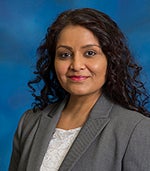
Anita Persaud - Swanson School of Engineering
Anita is the director of retention in the Swanson School of Engineering. She has a Doctor of Education in counselor education from Penn State, a Master of Education in counselor education from Penn State, and a Bachelor of Arts in psychology from Queens College of New York. She has been at Pitt since 2012.
Anita considers her work with students as a passion that gives her purpose. She finds it important to meet students where they are and cultivate personalized relationships with each student. She relies on Motivational Interviewing skills where she brainstorms solutions to the challenges while she guides them on achieving the change they want to see. She respects her students and encourages them to take ownership and responsibility for their lives.
Her nominator, Mary Besterfield-Sacre, senior associate dean for academic affairs, Swanson School of Engineering, said, “Anita Persaud is one of our school’s most valued staff members. She is a devoted and highly effective administrator and an admired colleague. Anita has been an exceptional leader in the success of our students.”
- 2024 Winners
Samuel Dickerson - Swanson School of Engineering
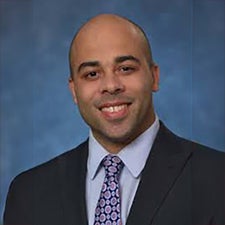
Dr. Samuel Dickerson is vice chair for education, director of the undergraduate program, an associate professor, and academic advisor in the Department of Electrical and Computer Engineering. He has a PhD, a Master of Science, and Bachelor of Science in electrical engineering, all from the University of Pittsburgh. He has been at Pitt since September of 2015.
Samuel takes great pride and joy in being an undergraduate advisor to students in his program. Central to Samuel’s approach to his advising philosophy is helping his advisees realize that their university education is only the beginning to what they can achieve. He strives to build a relationship with each of the students he works with, continuously reaching outside of the office and classroom spaces to build learning experiences and opportunities for them. Samuel works from a place of empathy, sharing his own academic experiences as a way to encourage students through challenges.
His nominator, Alan George, ECE department chair, says, “When it comes to student advising, Dr. Dickerson checks all the boxes, and far more. He is everything that one would want to see in a student advisor, and he goes above and beyond every semester.”
Amy Evans - School of Health and Rehabilitation Sciences

Amy Evans is a senior academic advisor in the Center for Advising and Student Success in the School of Health and Rehabilitation Sciences. She earned a Master of Public Policy and Management degree from the Graduate School of Public and International Affairs at the University of Pittsburgh and a Bachelor of Arts in psychology from Oberlin College in Ohio. She has been at Pitt since 2006.
Amy models her approach to advising from her experience as a counselor. She places responsibility for directing academic, professional, and personal development with the student, while guiding them with open question and active listening. Amy builds relationships and connections throughout the University to ensure her students have the support they need for success.
Her supervisor, Tiwanda Taylor, director of Academic Advising and Student Success says, “In addition to maintaining her caseload of advisees, Amy has served as the liaison for global opportunities. She coordinates programming with University offices and community resources to make students aware of opportunities.”
Adrian Gonzales - School of Public Health

Adrian Gonzales has been director of undergraduate advising in the School of Public Health since February 2023 and an academic advisor at Pitt since 1996. He earned his Master of Science in information and a Bachelor of Arts in physics and astronomy, both from the University of Pittsburgh.
As an advisor for over twenty years in multiple units at Pitt, Adrian has supported and built relationships with thousands of students. His advising philosophy starts with treating students with respect and kindness where he creates a warm and welcoming environment. He conveys a message of support and partnership with students and colleagues. Adrian continuously engages with the Pitt advising community, getting involved in initiatives and opportunities to build relationships and support our campus advising community.
Adrian’s nominator, Associate Dean of Academic Affairs Ada Youk, said, “Adrian has shown exceptional dedication to helping students in defining and achieving their academic goals. He engages students in meaningful conversations, helping them to explore and clarity their goals through insightful guidance.”
- 2023 Winners
Kearsten Adams
University of Pittsburgh at Greensburg
Kearsten Adams has been an academic advisor at the University of Pittsburgh at Greensburg Campus since 2010. She earned her Master of Teaching degree from the Virginia Commonwealth University and Bachelor of Arts in music performance from Mary Washington College in Fredericksburg, Virginia. At Pitt-Greensburg Kearsten also serves as the coordinator for the Summer Bridge Program and teaches college success and cornerstone courses to assist first-year students with the transition to college. She is also a part of the campus wellness team and helped to implement Greensburg’s version of the “wellness and resiliency” course to increase outreach and support on the campus.
As an advisor, she takes a proactive approach with her students by building relationships and providing outreach. She partners with campus resources like financial aid, career services, learning center, counseling center, and professors to ensure students have what they need to succeed. She meets students where they are both in and out of the typical advising situations and takes much pride in their accomplishments.
Kearsten’s supervisor, Director of Advising Beth Tiedemann, said, “Kearsten cares deeply about her students and places her students at the center of her work. I see evidence of this in her day-to-day work and in our conversations about particular student situations. Kearsten adapts her advising approach to work with each student in a way that is meaningful, authentic, and supportive.”
Kevin Riley
College of Business Administration
Kevin Riley has been an academic advisor at the University of Pittsburgh in the College of Business Administration since 1995. Kevin earned a BS in geology from Pitt. A true leader of the CBA advising team, Kevin uses his experience to assist colleagues on continual improvement, policy, and procedures within the department.
A true servant leader of our institution, he has served on many committees, taught several courses, and even helped to develop the first iteration of the CBA website. He is a Gallup-Certified Strengths Coach and incorporates this philosophy into his advising interactions. Kevin explains that advisors are “touchpoints” for students with the University, and he strives to be an empathetic student advocate and a clearinghouse for information and referrals. Using a strengths-based approach, he often asks students questions to help them think about their academic goals and aspirations.
One of his current students said, “I have had a wonderful experience at Pitt, and that all began with Kevin. Now, as my time here comes to a close, he is playing a pivotal role in my next chapter. To me, advising excellence is personal, compassionate, and transformative. My experience with Kevin has been all that and more. He believed in my ambitious dual degree dream four years ago, for which I will be forever grateful. He has guided me every step of the way and is the epitome of excellent advising at Pitt.”
Kaitlyn Washko
Swanson School of Engineering
Kaitlyn Washko is an academic advisor in the Swanson School of Engineering. Kaitlyn earned her MS in professional counseling from Carlow University and BS in psychology from Penn State.
On the first-year advising team in Swanson, Kaitlyn helped to implement a strengths-based advising model for the unit, teaches first-year seminars, recruits and trains tutors, and serves on various committees to support the school’s mission. She is also part of the Mental Health Task force and is trained in the Mental Health First Aid. Kaitlyn’s advising philosophy is based in assisting students to view their full potential and ability to succeed. She accomplishes this by building rapport, creating a safe environment for all students, being a problem-solver, highlighting strengths, having patience, and showing gratitude. One of her greatest strengths is in working with students facing academic difficulty.
Jill Harvey, director of advising and her supervisor, said, “Kaitlyn works so effectively in this coaching role and she is an ideal fit to work with our students who are struggling because her own Top 5 Clifton Strengths are rooted in relationship-building and connecting with others...Kaitlyn’s ability to relate to and empathize with this group of students comes naturally to her! She is able to use her strengths to cheer students on, find their own strengths, and adapt to new and altered academic plans from what they originally laid out. Kaitlyn is a compassionate helper, a trusted resource, and empathetic presence for students implementing a Plan B.”
- 2022 Winners
Danielle M. Andrews-Brown
Kenneth P. Dietrich School of Arts and Sciences
Danielle M. Andrews-Brown, lecturer, undergraduate academic advisor, and Environmental Studies program coordinator – Dietrich School of Arts and Sciences, holds a BS in biology from South Carolina State University, MS in plant and soil sciences from University of Kentucky and a PhD in soil sciences from Penn State University.
She is a revered faculty member, mentor and advisor in the department of geology and environmental science. Additionally, she is the assistant dean for the Dietrich School for Undergraduate Studies and is the academic integrity officer. In this role, she has been able to deploy her skills and abilities as a departmental advisor to school and university-wide initiatives. Associate Dean Twyning noted, “Prepared to work with any student, she has become an expert across the board, helping students navigate their way to the best possible academic outcome... in all her roles, Danielle is a strong and insightful advocate for our students.”
Danielle's guiding principles include being student-centered, reflective, and inclusive. She aims to enhance confidence, agency, and capacity for self-advocacy in each advisee. It is clear she engages in constant examination, assessment, and self-reflection of her advising practices and implementation of strategies that support her overall well- being and that of her students. She works to develop trusting and respectful relationships with advisees and to support their diverse backgrounds, interests, and needs by creating relationships that are culturally appropriate and effective at addressing barriers for students facing socioeconomic, cultural, physical, and learning barriers. She takes time to meet with her students in order that they feel comfortable and confident in their goals, dreams, and plans for college and beyond.
Karen Ricco
University of Pittsburgh at Greensburg
Karen Ricco, an academic advisor at the University of Pittsburgh at Greensburg since 2007. Karen earned three degrees from Pitt: BS in applied mathematics, BA in linguistics, and MEd in higher education. She is highly involved in her campus and community, including the National Theater Honors Society, National Math Honors Society, American Legion Auxiliary, and several choirs in her community.
Karen has a demonstrated track record of advising and mentoring professional development and leadership. She trains others on her campus and is often the “go to” person for questions about advising. One nominator wrote, “When stumped, I reach out to Karen... in the rare occurrence that Karen does not know the answer to my question, she always would direct me to the appropriate staff member.”
Her advising philosophy focuses on fostering the whole student, factors important for student success and encouraging personal growth. It is clear from the recommendations provided that students and colleagues value Karen’s commitment to her campus community and their personal and academic success.
Devin N. Ulm
Swanson School of Engineering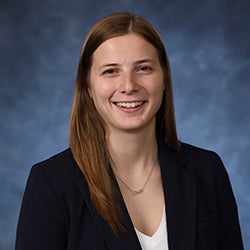
Devin N. Ulm, Academic Advisor, First-Year Engineering Program – Swanson School of Engineering. Devin holds a BS in engineering from Robert Morris University and an MEd in higher education from Pitt. Her supervisor, Jill Harvey, describes her as “analytical, a problem-solver, and one who seeks constant improvement. She is such an asset to our team because she innately brings a mindset that many student services professionals have to work a little harder to access.”
While she has only been in the profession a short time (three years), she has already shown leadership capacity at Pitt and in the broader advising community. She is an advocate for her peers and has helped others in the profession. Devin co-leads the PMACC (Community Circle) for new advisors, she has presented at the annual Mentoring and Advising Summit and other workshops, and sits on committees for the Swanson School and the wider University. She was also on the workgroup which developed curriculum for Pitt ACT, the online training program for advisors.
One of her colleagues shared, “As a new advisor, I’ve been exceedingly grateful for Devin’s leadership in the PMACC for New Advisors. Devin is a master at communicating advising policy, theory, and practice to a group representing a wide range of departments and backgrounds.”